|
Product Type
|
Magnetoresistors (MR Sensors)
|
|
Detection Principle
|
AMR (Anisotropic Magnetoresistance), GMR (Giant Magnetoresistance), TMR (Tunnel Magnetoresistance)
|
|
Sensor Output
|
Analog output, Digital output (Push-pull)
|
|
Operating Voltage
|
1.8V–5V (Typical for TMR sensors)
|
|
Package Type
|
SOT-23, DFN, Custom Modules
|
|
Operating Temperature
|
-40°C to +150°C (TMR typical range)
|
|
Temperature Coefficient
|
±0.1%/°C (TMR), ±0.3%/°C (AMR/GMR)
|
|
AMR Sensitivity
|
Approximately 3–5%/Oe
|
|
GMR Sensitivity
|
Approximately 10–20%/Oe
|
|
TMR Sensitivity
|
Approximately 50–200%/Oe
|
|
Standby Current
|
nA level (Low-power TMR applications)
|
|
Customization
|
Available for sensor structure, package, and performance requirements
|
|
Grade Category
|
Technology
|
Typical Applications
|
Features
|
|
Standard Grade
|
AMR / GMR
|
Industrial sensors (e.g., position detection)
|
Basic sensitivity for general industrial use
|
|
High-Performance Grade
|
TMR
|
Precision applications (e.g., medical imaging, aerospace)
|
Highest sensitivity (50–200%/Oe), high accuracy
|
|
Low-Power Grade
|
Nanopower TMR
|
IoT devices, wearables
|
Ultra-low standby current (e.g., 310nA), energy-efficient
|
Magnetoresistors are widely used in:
Automotive: Wheel speed sensors (ABS), current sensing in EVs.
Data Storage: HDD read heads (GMR/TMR).
Consumer Electronics: Smartphone compasses (AMR), smart locks (TMR).
Industrial: Robotics (position feedback), angle encoders.
1. High-Sensitivity Magnetic Field Detection
Magnetoresistors convert magnetic changes into resistance variations. Sensitivity levels: AMR ~3–5%/Oe, GMR ~10–20%/Oe, TMR ~50–200%/Oe — TMR offers the highest sensitivity for precision magnetic sensing.
2. Low-Power Operation — Ideal for Battery Devices
Suitable for battery-powered and energy-efficient systems. TMR-based Magnetoresistors operate in the nA range — perfect for IoT devices, wearables, and compact electronics requiring long battery life.
3. Stable Across Wide Temperature Ranges
Maintain reliable sensing from -40°C to +150°C. TMR sensors offer a temperature coefficient around ±0.1%/°C — minimizing signal drift in temperature-varying environments.
4. Detects Both Static and Dynamic Magnetic Fields
Unlike inductive sensors that detect only changing fields, AMR and TMR sensors detect static (DC) fields — ideal for position detection, angle measurement, current sensing, and magnetic switching.
Our OEM/ODM capabilities include:
Sensor Performance Customization: Support AMR, GMR, and TMR technology selection according to sensitivity, power consumption, and accuracy requirements.
Package Customization: Provide standard packages such as SOT-23, DFN, and customized module solutions according to customer product design.
Output Configuration Customization: Support analog output and digital push-pull output options for different electronic systems.
Application Optimization: Help customers select suitable Magnetoresistors for automotive electronics, industrial automation, consumer devices, and precision equipment.
Surface Treatment Options:
None: Standard for AMR/GMR due to inherent corrosion resistance.
Epoxy: For mechanical protection in harsh environments (e.g., automotive).
Nickel/Gold: Enhances solderability for PCB-mounted TMR modules
Packaging
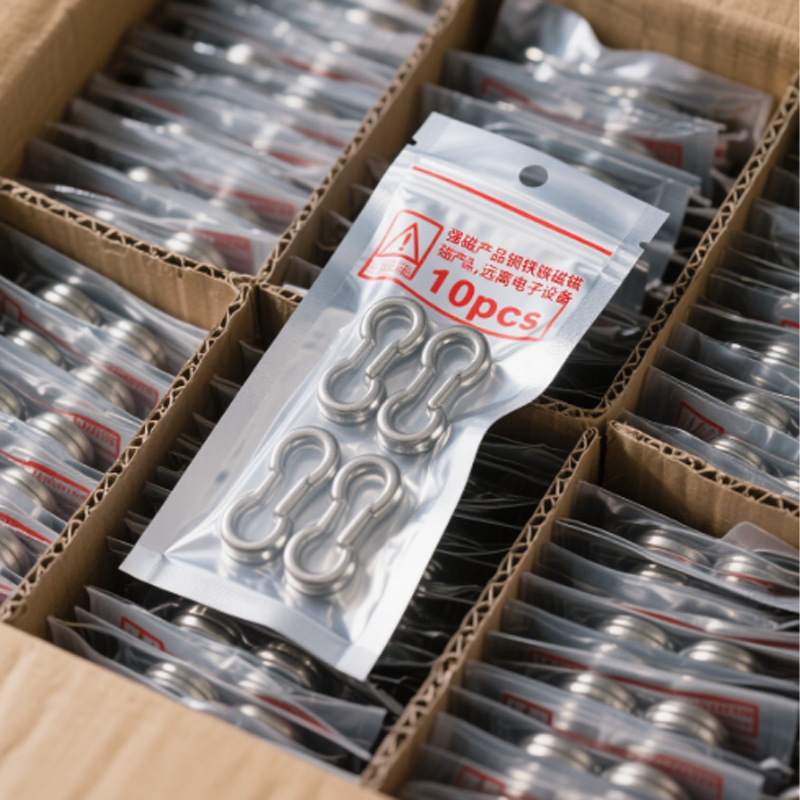
To ensure product reliability during transportation and storage, Magnetoresistors are packaged according to industry requirements.
Standard Packaging:
Sensors are typically packed using anti-static trays, reels, or protective packaging materials to prevent electrostatic damage during transportation.
Bulk Packaging:
Large-volume orders are supplied with moisture-resistant packaging and protective containers suitable for electronic component storage.
Customized Packaging:
Labels can include product model, batch number, electrical specifications, quantity, and customer-specific requirements.

Traditional Sensors Cannot Provide Enough Sensitivity
Some applications require detecting very small magnetic changes. Magnetoresistors provide higher sensitivity compared with traditional magnetic sensing technologies. TMR sensors can reach approximately 50–200%/Oe sensitivity, making them suitable for precision magnetic detection.
Power Consumption Requirements for Compact Devices
Many modern electronic products require longer battery life and lower energy consumption. Low-power TMR Magnetoresistors can operate at nA-level standby current, helping reduce overall system power consumption.
Magnetic Detection Accuracy Changes With Temperature
Temperature variation can affect sensor output stability. TMR Magnetoresistors provide a low temperature coefficient of approximately ±0.1%/°C, helping maintain more stable sensing performance in changing environments.
1. What is the difference between AMR, GMR, and TMR Magnetoresistors?
AMR, GMR, and TMR are different magnetoresistance technologies. AMR provides moderate sensitivity, GMR offers higher sensitivity and improved linearity, while TMR provides the highest sensitivity and lower power consumption among these technologies.
2. How do Magnetoresistors compare with Hall sensors?
Magnetoresistors, especially TMR sensors, can provide more than 50 times higher sensitivity than traditional Hall sensors in certain applications while supporting nA-level power consumption. However, cost and application requirements should be considered when selecting the suitable technology.
3. Can Magnetoresistors detect static magnetic fields?
Yes. AMR and TMR Magnetoresistors can detect static DC magnetic fields, making them suitable for position sensing, angle detection, and magnetic switching applications.
4. Why choose GMR over AMR?
GMR provides higher sensitivity and wider linear operating characteristics compared with AMR technology. It also does not require set/reset coils for operation, simplifying system design.
5. Can Magnetoresistors be customized for OEM projects?
Yes. Manufacturers can customize sensor type, sensitivity, package structure, output format, and electrical performance according to customer requirements.
6. What industries commonly purchase Magnetoresistors?
Major B2B buyers include automotive electronics manufacturers, industrial automation companies, robotics manufacturers, electronic device producers, and sensor system integrators.
7. What is the typical lead time for customized Magnetoresistors?
Customization lead time depends on sensor type, thin-film manufacturing requirements, package design, and order quantity. TMR customization typically requires approximately 6–8 weeks due to thin-film deposition complexity.
8. How should customers select the right Magnetoresistors?
Selection depends on required sensitivity, operating temperature, power consumption, output type, magnetic field range, and application environment. Manufacturers can provide technical support to recommend suitable solutions.


 English