|
Sensor Type
|
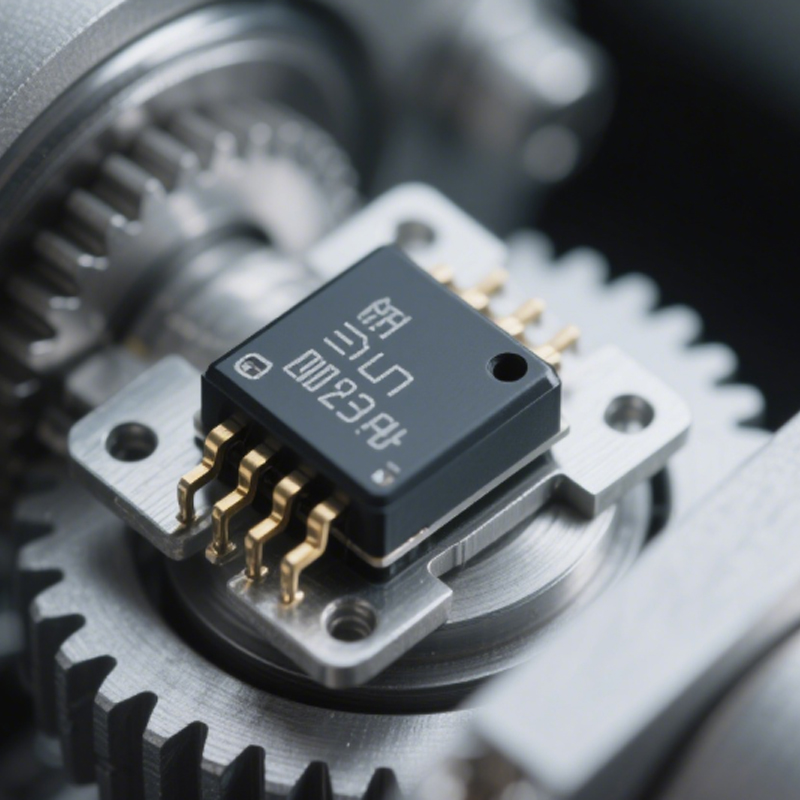
AMR (Anisotropic Magnetoresistance), GMR (Giant Magnetoresistance), TMR (Tunnel Magnetoresistance)
|
|
Detection Principle
|
Detect magnetic field changes through resistance variation caused by magnetoresistance effects
|
|
AMR Sensitivity
|
Approximately 3–5%/Oe
|
|
GMR Sensitivity
|
Approximately 10–20%/Oe
|
|
TMR Sensitivity
|
Approximately 50–200%/Oe
|
|
Operating Voltage
|
TMR: 1.8V–5V; AMR: 2.16V–3.6V
|
|
Output Signal
|
Digital output (I²C/PNP), analog output (4–20mA), analog voltage output (example: 0.5–2.5V)
|
|
Operating Temperature
|
TMR: -40°C to +150°C
|
|
Resolution
|
Up to 1μm for magnetostrictive variants
|
|
Protection Rating
|
IP65/IP68 for some industrial versions
|
|
Package Types
|
LGA, SOT, DFN and customized packages
|
|
Temperature Drift
|
Approximately ±0.1%/°C for TMR
|
|
Grade Category
|
Technology
|
Typical Applications
|
Key Features
|
|
Standard
|
AMR / GMR
|
Industrial position/speed detection
|
Basic sensitivity, suitable for general industrial use
|
|
High-Performance
|
TMR
|
Aerospace, medical diagnostics
|
±0.01mm accuracy, highest sensitivity (50–200%/Oe)
|
|
Low-Power
|
Nanopower TMR
|
IoT devices, wearables
|
Ultra-low standby current (e.g., 310 nA), energy-efficient
|
Automotive
Wheel speed sensors (ABS), EV current monitoring.
Data Storage
HDD read heads (GMR/TMR).
Consumer Electronics
Smartphone compasses (AMR), AR/VR motion tracking.
Industrial
Robotic positioning (magnetostrictive linear sensors).
Aerospace
Navigation systems (fluxgate/TMR hybrids).
1. High-Sensitivity Detection for Accurate Measurement
Magnetoresistive Sensors convert magnetic field changes into resistance variations. Sensitivity levels: AMR ~3–5%/Oe (basic detection), GMR ~10–20%/Oe (position/speed sensing), TMR ~50–200%/Oe (precision measurement).
2. Detects Static Magnetic Fields for Continuous Monitoring
Unlike sensors that detect only changing fields, AMR and TMR sensors measure static (DC) fields — enabling continuous monitoring for position feedback, angle detection, and magnetic switching.
3. Ultra-Low Power Consumption for Smart Devices
TMR sensors offer excellent energy efficiency. Some nanopower models achieve standby current as low as 310nA — ideal for IoT, wearables, and battery-powered systems.
4. Wide Temperature Range for Harsh Environments
TMR sensors operate from -40°C to +150°C with temperature drift of approximately ±0.1%/°C — reducing errors and ensuring long-term stability in automotive, industrial, and high-reliability applications.
5. Multiple Output Options for Easy Integration
Available with digital interfaces (I²C, PNP) and analog outputs (4–20mA) — flexible integration into automation systems, control modules, and electronic devices.
Sensor technology selection: Provide AMR, GMR, or TMR solutions based on detection accuracy, cost requirements, and operating environment.
Package customization: Support LGA, SOT, DFN, and customized package structures.
Output customization: Provide digital output, analog output, and system-compatible signal solutions.
Parameter optimization: Optimize sensitivity, detection distance, operating temperature, and power consumption according to customer requirements.
Surface treatment options:
None: AMR/GMR sensors often omit coatings due to inherent corrosion resistance
Epoxy/Nickel: For mechanical protection (e.g., automotive AMR sensors) or solderability (PCB-mounted TMR)
Gold: Enhances contact reliability in high-frequency applications
For customers requiring advanced TMR solutions, the customization development cycle is typically around 6–8 weeks due to thin-film deposition manufacturing processes.
Packaging
Packaging Method Description
Standard Packaging Anti-static packaging for regular electronic component transportation
Tray Packaging Suitable for automated SMT production and high-volume assembly
Moisture-Proof Packaging Designed for long-term storage and overseas transportation

Improving Detection Accuracy in Weak Magnetic Fields
For applications requiring detection of small magnetic field changes, traditional sensing solutions may not provide sufficient accuracy. Magnetoresistive Sensors using TMR technology can achieve sensitivity of approximately 50–200%/Oe, helping customers improve position detection and angle measurement accuracy.
Reducing Power Consumption in Electronic Devices
Low power consumption is increasingly important for smart devices and IoT products. Nanopower TMR products with standby current as low as 310nA help reduce system energy consumption and improve battery life.
Improving Reliability in Complex Industrial Environments
Automotive and industrial equipment often operate under temperature variations, vibration, and long-term working conditions. Certain Magnetoresistive Sensors support IP65/IP68 protection levels and operating temperatures from -40°C to +150°C, making them suitable for demanding environments.
Supporting Miniaturized Product Design
Modern electronic products require smaller components. Magnetoresistive Sensors with compact packages such as LGA 3×3×0.9mm³ help customers achieve space-saving product designs without sacrificing sensing performance.
1. What is the difference between Magnetoresistive Sensors and Hall sensors?
Magnetoresistive Sensors detect magnetic fields through magnetoresistance effects. Compared with Hall sensors, TMR sensors can provide more than 50 times higher sensitivity and support nanoamp-level power consumption, although the manufacturing cost is generally higher.
2. Can Magnetoresistive Sensors detect static magnetic fields?
Yes. AMR and TMR Magnetoresistive Sensors can detect DC magnetic fields, making them suitable for position detection, angle measurement, and continuous magnetic monitoring applications.
3. Why choose TMR instead of AMR or GMR?
TMR provides higher sensitivity and lower power consumption, making it suitable for precision and energy-efficient applications. AMR and GMR are commonly selected for cost-sensitive industrial sensing applications.
4. What information should customers provide when purchasing Magnetoresistive Sensors?
Customers should provide application details including detection distance, magnetic field range, output type, voltage requirement, operating temperature, installation dimensions, and environmental conditions to select the most suitable model.
5. Do you support customized Magnetoresistive Sensors?
Yes. Manufacturers can provide customized solutions including sensitivity adjustment, package design, output optimization, and application-specific development.
6. Which industries use Magnetoresistive Sensors?
Main application industries include automotive electronics, industrial automation, data storage, consumer electronics, aerospace, and medical equipment.


 English